


You signed the contract, and for about a week it felt great. Then the Boise job offer fell through. Maybe it was your mom’s health instead, or the payoff letter showed the sale price won’t cover the mortgage. Whatever it was, you’ve got a signed agreement and one question: is a seller back out even possible in Colorado?
Sometimes, yes. How you do it matters more than why you want out, and a lot of what sellers hear about it is just flat wrong.
Can a Seller Back Out of a Contract in Colorado?
The residential Contract to Buy and Sell that the Colorado Real Estate Commission approves runs twenty pages. A lot of those pages cover one thing: who’s allowed to walk away, and when. Nothing in it lets you out just because you changed your mind.
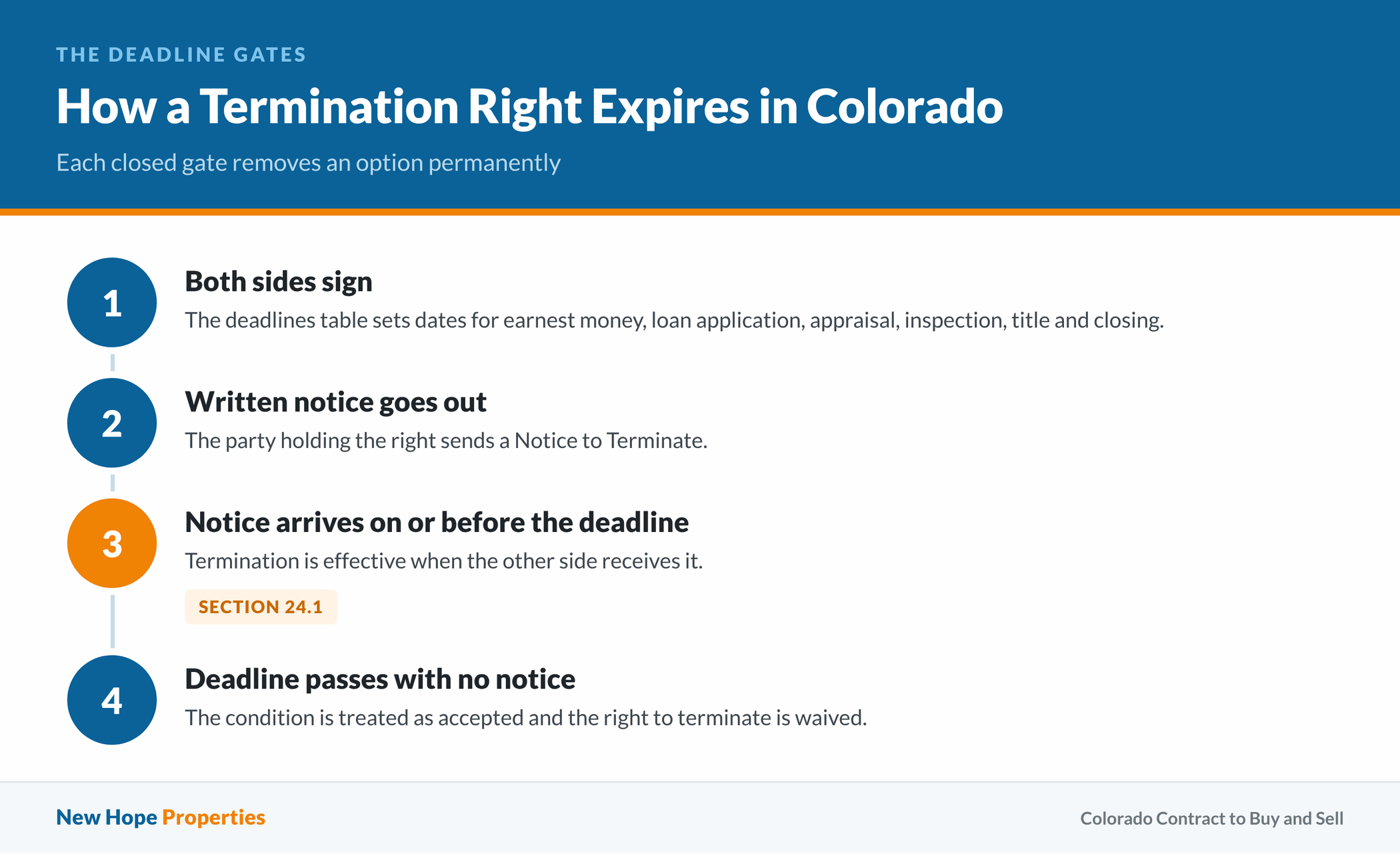
So a seller can back out in Colorado, but only through a door the contract already built in. Section 24.1 covers the mechanics. If you hold a right to terminate, your termination kicks in once the buyer actually receives written notice. And that notice has to get there by the deadline in the contract. The Colorado Division of Real Estate posts the full form online.
A Notice to Terminate that shows up even a day after the stated deadline is ineffective, and the sale goes ahead as if you’d never sent it.
That’s a hard spot to be in right now. In October 2026 the statewide median sale price for Colorado homes was $547,606, about half a percent lower than a year earlier. The median home sat 51 days on the market before it sold. With prices drifting sideways, a seller who accepted an offer in August can watch a neighbor list higher in October and start hunting for an exit.
A few years back I worked with a retired couple who’d been carrying two mortgages for nearly eleven months after buying a patio home. They’d signed with a buyer, then panicked when their agent hinted that another party might have paid more. Their garage still held a snowblower they’d bought for a house they no longer lived in.
They stayed in the contract, and it closed. Chasing that phantom better offer would’ve cost them more than the gap.
What Legal Reasons Let a Colorado Seller Back Out of a Contract?
A seller in Montrose had a buyer who never deposited earnest money and stopped answering emails three days past the loan application deadline. That seller had a real, documented path out, not just a feeling.
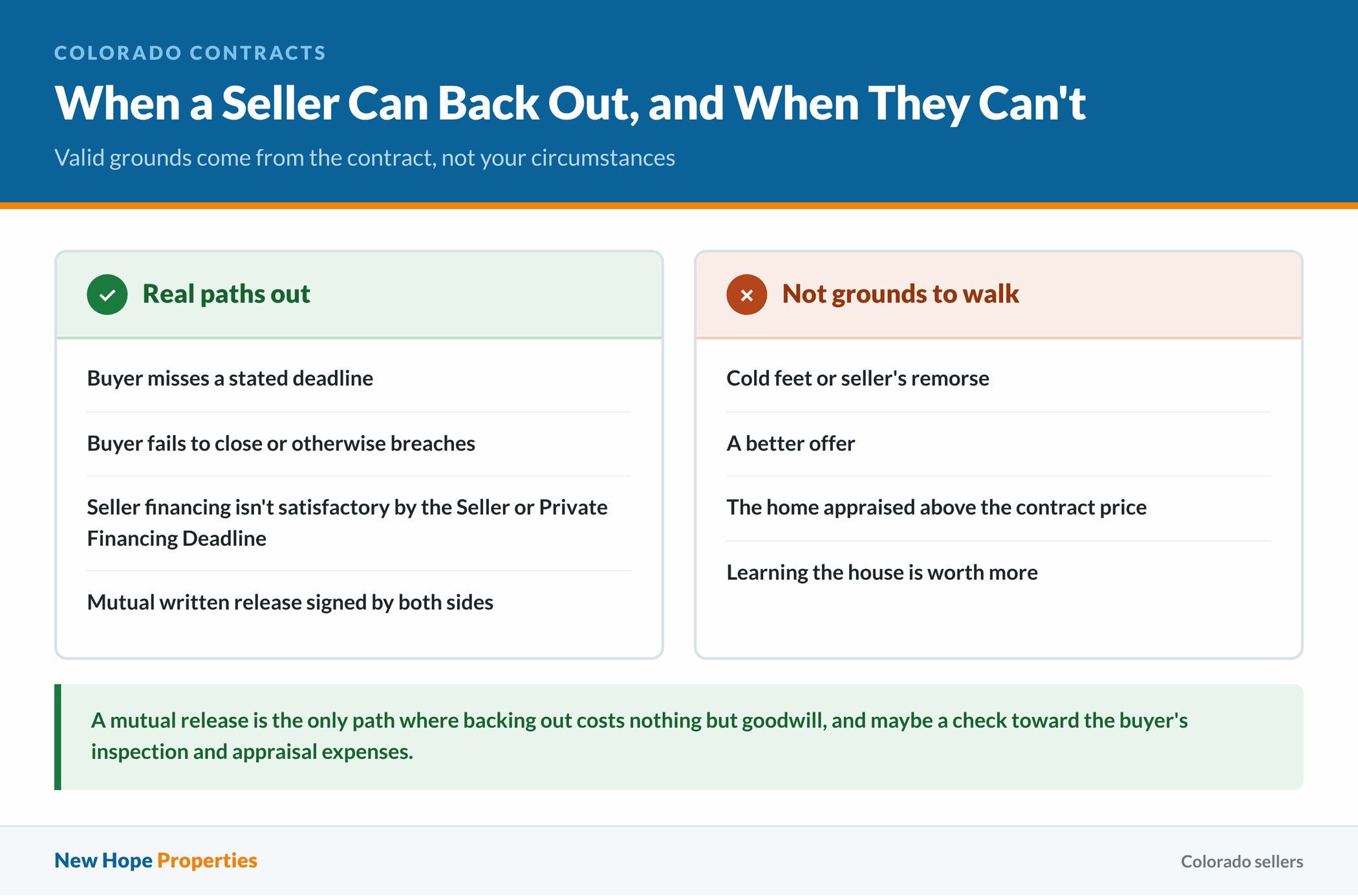
Buyer default is the cleanest ground for a seller back out in Colorado. The state contract runs on a deadlines table covering earnest money, loan application, appraisal, inspection objection and resolution, title objection, and closing. If a buyer misses one of those stated deadlines, specific provisions may hand the seller a termination right. When the buyer fails to close or otherwise breaches, the contract’s seller remedies typically include terminating and keeping the earnest money.
Seller financing opens another lane. If you’re carrying paper, the form lets the seller terminate on or before the Seller or Private Financing Deadline. That right kicks in when the financing isn’t satisfactory in the seller’s sole subjective discretion.
Then there’s mutual release. Your buyer agrees to let you out, both sides sign, and everyone moves on. I push that option hardest, since it’s the only one where a seller back out costs nothing but goodwill and maybe a check toward the buyer’s inspection and appraisal expenses.
Cold feet won’t work here. Neither will a better offer, or learning that your property appraised above the contract price. Those are wishes rather than contractual rights, and courts here don’t treat wishes as remedies.
Would you want the buyer walking for those same reasons on your Colorado closing day? Most sellers say no when I put it that way.
How Do Colorado Contract Deadlines Affect a Seller’s Right to Back Out?
Most sellers picture the contract as a long runway with an exit ramp near the end. In practice, the Colorado form is a row of small gates that close one at a time, and each closed gate removes an option for good.
Under the state form, if a notice doesn’t arrive by its deadline, the party holding the right accepts that matter, document, or condition as satisfactory. That party waives its right to terminate under that provision. Waived is waived. You can’t revive it later because something inconvenient surfaced.
Buyers hold most of these gates by design. Inspection objection, appraisal, title review and association documents each give your buyer a structured way to walk while you mostly wait. If no earnest money is in place, you’ve got limited financial recourse when a buyer walks away from a signed agreement.
Sellers also lowball the timing math. Colorado homes sat longer in October 2026. Single-family properties averaged 68 days on market and attached homes averaged 84, according to the Colorado Association of REALTORS. That’s a long courtship before you even reach the deadline table.
I see the same mistake over and over. Sellers treat deadlines as suggestions because their broker has been flexible about everything else. Three weeks after the only window shut, they try to back out.
Write every date on a calendar the day you go under contract. Skip the phone and your agent’s system. Use paper on the fridge, where you’ll see it Tuesday morning with your coffee.
What Happens If a Seller Tries to Back Out Without Cause?
A judge can order you to sell the house anyway. That’s no scare tactic. It’s the remedy written straight into the agreement you signed.
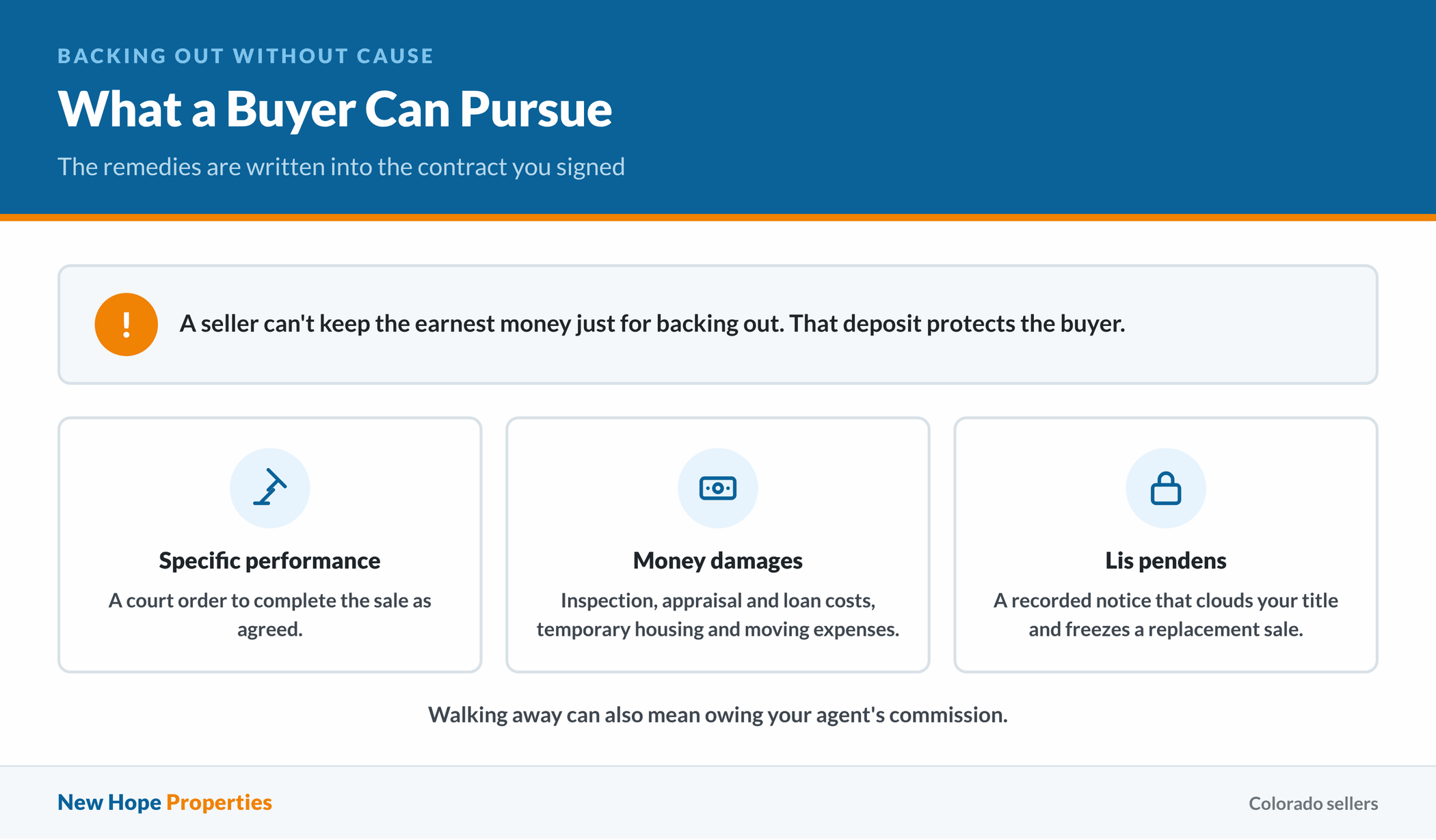
When a seller cancels without legal justification, the buyer may sue for specific performance, which forces the sale of the Colorado property as agreed. Courts treat real estate as unique. That’s exactly why specific performance stays a live remedy in property contracts when it isn’t in ordinary consumer disputes.
Money damages ride along with it. Your Colorado buyer may claim inspection costs, appraisal fees, loan application charges, temporary housing and moving expenses. Walking away can also mean owing your agent’s commission, since you triggered the failure.
Sellers tend to underweight one piece: a recorded lis pendens. A buyer’s attorney can cloud your title while litigation runs. That cloud freezes any replacement sale, so your Colorado property sits unsellable while the lawyers bill.
The earnest money won’t save you either. A seller may back out under limited circumstances, yet Colorado law doesn’t let a seller keep the earnest money just for doing it. That deposit protects the buyer, full stop.
In practice, most of these end in negotiation rather than trial. Buyers usually recover their deposit plus costs, sometimes with an extra payment to release the seller cleanly. I’d rather you write that check at week two than at week forty.
Can a Buyer Sue After a Seller Backs Out of a Contract?
For years I figured buyers rarely bothered suing a seller over a Colorado sale that fell apart, because litigation is slow and expensive and most people just move on. I was wrong, and more so every year in a market where the next comparable house costs more or doesn’t exist.
Yes, a buyer can sue after a seller back out attempt in Colorado. Breach of contract claims here generally carry a three-year statute of limitations under C.R.S. § 13-80-101(1)(a). The clock starts when the breach is discovered, or when it reasonably should have been with ordinary diligence. You’ll find the statutory text at Justia’s Colorado code library.
Three years is a long shadow to live under after you’d written the whole Colorado contract off as dead and buried.
What the buyer asks for depends on what they lost. Remedies typically include return of earnest money, reimbursement of costs, and sometimes the right to compel the sale through specific performance. I’ve watched a buyer who’d already sold their own Colorado home move into a rental, and that kind of situation creates real, documentable damages.
The strength of the buyer’s case tracks almost entirely with your paper trail. Every text, every email from your broker and every signed amendment gets read aloud. Silence at the wrong moment reads as default.
Keep your communication boring and written. A note saying “We received your inspection objection and will respond by the resolution deadline” beats a phone call nobody remembers accurately six months later. Colorado litigation turns on documents far more than on who sounded reasonable.
How Can a Seller Back Out of a Contract Without Legal Trouble?
Call your buyer before you call anyone else. That means before your cousin who flips houses, before a forum, and before me. The person holding the other half of this Colorado contract is also the one who can hand you a clean release.
Buyers release sellers more often than you’d guess, especially early. Someone four days into due diligence hasn’t spent much and hasn’t emotionally moved into your Colorado house yet. Offer to cover their out-of-pocket costs, and ask plainly.
Your second move is getting the contract reviewed before you send any notice. A seller back out executed on the wrong provision is worse than no attempt at all. Now your intent’s in writing, and you’ve handed the buyer evidence.
The third option is the one I’d argue gets overlooked: close on what you signed, then solve the underlying problem separately. If money’s the issue, there are ways to restructure after closing. If timing is, a post-closing occupancy agreement lets you stay in your Colorado home for weeks while the buyer takes title.
A direct buyer fits one situation well. If a retail Colorado sale can’t move fast enough for you, lining up a certain, as-is offer before you sign anything prevents the whole mess. New Hope Properties walks Colorado homeowners through that comparison honestly, including when listing is clearly the better call.
Figure out your actual goal first. Do you want out of this contract, or out of this house? Sellers mix those two up constantly, and the answers run in opposite directions.
What Questions Should Colorado Sellers Ask Before Backing Out of a Contract?
That distinction shapes every question a seller should ask before acting.
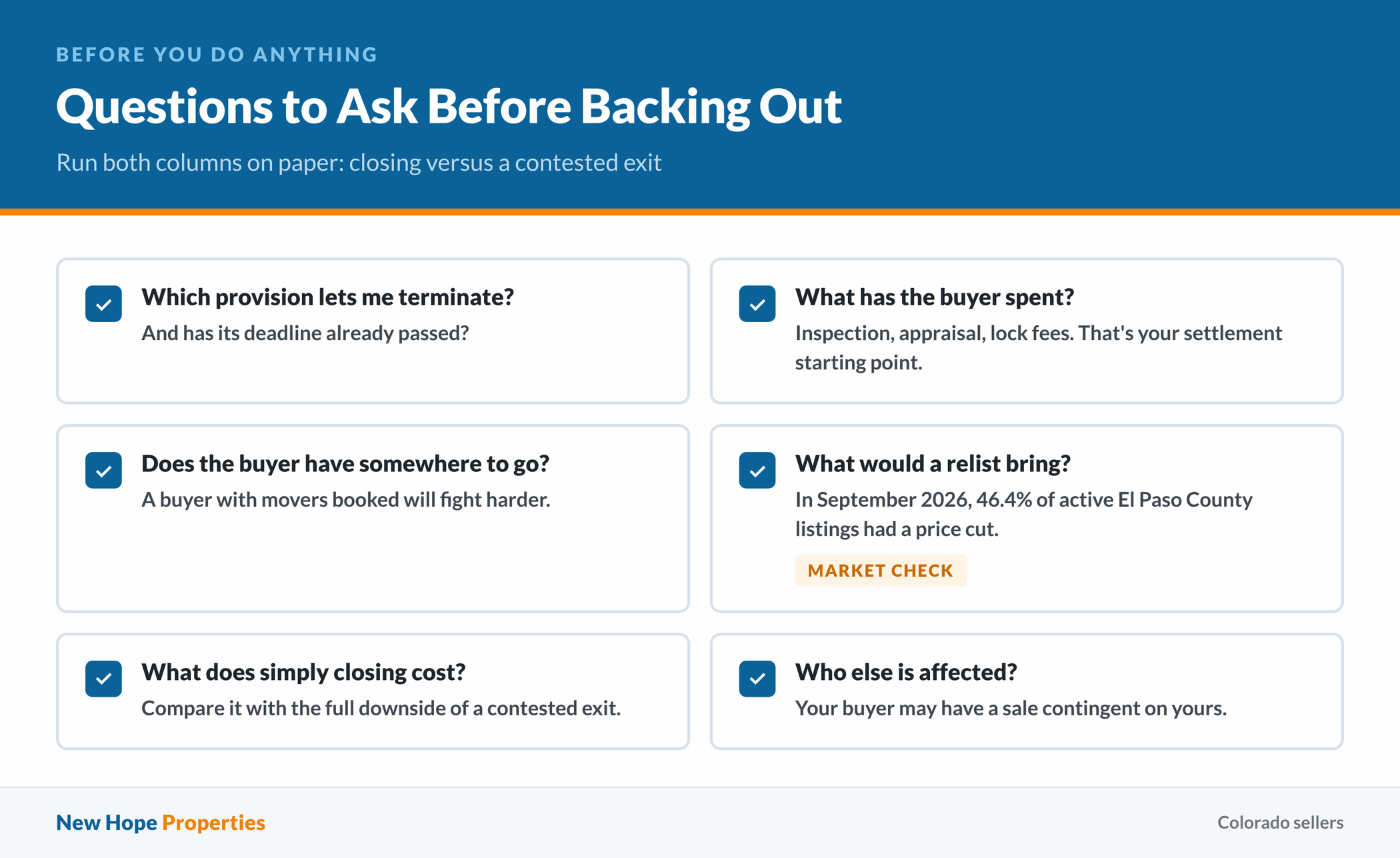
Start with the contract. Which numbered provision gives you a termination right, and has its deadline passed? If your broker can’t point to a section, you don’t have one.
Next, ask what the buyer has already spent on inspection, appraisal, lock fees or an HOA document review. That figure is your settlement starting point, and it’s usually less than either side’s legal fees.
Find out whether your Colorado buyer has somewhere else to go. A buyer with backup options will take a release. One who already sold a condo and booked movers is going to fight.
Ask what your home would realistically fetch if you relisted it. Mesa County ended October 2026 with 1,049 active residential listings, up 36.6% from a year earlier, according to the Bray Report. A relisted home that already showed as pending tends to draw lowball offers.
Then weigh the cost of simply closing against the full downside of a contested seller back out in Colorado, including months of uncertainty. Put both columns on paper.
Last, ask who else gets hurt. Your buyer may have a sale contingent on yours, and breaking one Colorado contract can topple three.
When Should a Colorado Seller Talk to a Real Estate Attorney Before Backing Out?
“I can’t afford a lawyer over this.” Fair enough, though an hour of consultation costs a fraction of defending a contested specific performance claim. The math isn’t close.
Call an attorney when your buyer has refused a mutual release, or once you’ve put in writing that you might not close. A real estate attorney is the right call as soon as a Colorado sale starts breaking down, and this overview of earnest money in Colorado makes the same point from the attorney’s side.
Brokers are great with deadlines, yet they can’t stand in for counsel. Colorado licensing rules keep them from practicing law, so a broker can explain what a provision says without telling you what it means for your exposure.
Title problems call for a lawyer too. Undisclosed heirs, an ex-spouse still on the deed or a forgotten lien can make performance impossible, not merely unwelcome. That distinction changes everything about a seller back out in Colorado.
An heir in Grand Junction called me on a Thursday after her father moved into assisted living. She’d signed a contract believing her brother had agreed. He hadn’t, his name sat on the deed beside hers, and his woodworking bench was still in the basement. One consultation sorted out what she could legally do, and the sale was restructured instead of blown up.
Most Colorado sellers who think they need an exit really need a fix. A good attorney can tell which one you’re holding within twenty minutes.
Frequently Asked Questions
How Often Do Buyers Walk Away From Colorado Contracts Compared to Sellers?
Buyers terminate far more often, and the Colorado form is built that way on purpose. Inspection, appraisal, title, loan and association document provisions each give the buyer a structured exit, while sellers get almost none. That imbalance surprises Colorado homeowners more than anything else when they read their contract closely for the first time.
At What Point Does a Colorado Seller Lose the Ability to Terminate?
You lose it the moment the relevant deadline passes without written notice reaching the other party. After that gate closes, the contract treats you as having accepted the condition, and no later discovery reopens it. After closing and recording, the question moves out of contract territory entirely and into claims about fraud or title.
Does a Seller Back Out Attempt Affect the Real Estate Commission Owed?
It can. Listing agreements in Colorado generally entitle the broker to compensation once a ready, willing and able buyer is produced on acceptable terms. Walking away from a performing buyer may leave you owing commission on a sale that never happened. Put that line in your cost comparison.
If you’re sitting with a contract you regret, or still deciding whether to sign one, we’re glad to talk it through. There’s no pitch and no obligation. If the right answer is to go through with what you already signed, we’ll tell you that plainly.
Talk It Through Before You Sign or Walk
When you’re stuck between a signed contract and a change of plans, a short conversation can sort out your options. Reach out to New Hope Properties or fill out the form below, and we’ll give you a straight answer.