![Optimal time to stay in a home before selling in [market_city]](https://image-cdn.carrot.com/eyJidWNrZXQiOiJwcm9kdWN0aW9uLmNhcnJvdC11cGxvYWRzLm9uY2Fycm90LmNvbSIsImtleSI6InVwbG9hZHMvc2l0ZXMvNzc5OTIvMjAyNi8wOC9PcHRpbWFsLXRpbWUtdG8tc3RheS1pbi1hLWhvbWUtYmVmb3JlLXNlbGxpbmcucG5nIiwiZWRpdHMiOnsicmVzaXplIjp7IndpZHRoIjoxMTUyfSwidG9Gb3JtYXQiOiJ3ZWJwIiwid2VicCI6eyJxdWFsaXR5Ijo3MH19fQ==)

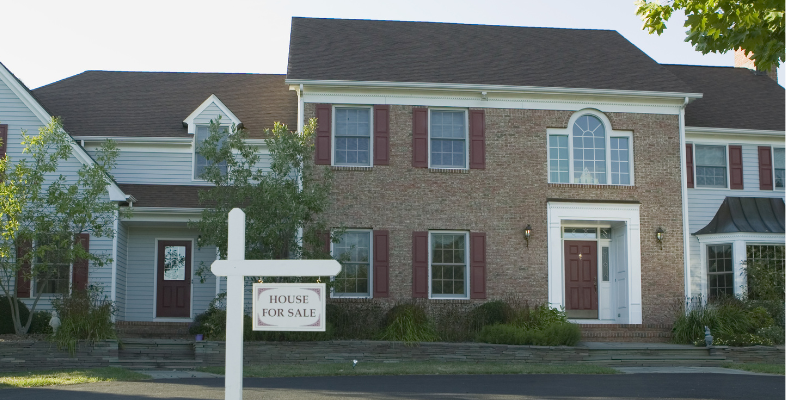
People don’t start thinking about selling until something forces the question. A job offer two states away. A parent who can’t live alone anymore. A mortgage payment that used to feel manageable but doesn’t anymore. And once that question hits, a second one follows fast: have I been here long enough to actually come out ahead? How long should you live in a house before selling? That is the question this article answers.
How Soon Can You Legally Sell a House After Buying It?
Can you sell the day after you close? Technically, yes. Nothing in federal law prevents a homeowner from listing immediately after purchase. Your deed is your deed. The real estate market doesn’t impose a mandatory holding period on you.
What slows sellers down is money, not law. Selling in the first few years makes breaking even difficult because of up-front closing costs, interest-heavy early mortgage payments, and potential tax hits. Your early loan payments are weighted toward mortgage interest rather than principal, which means your equity stake barely moves for a while even as you keep writing checks to the bank (amortization schedules are front-loaded by design).
Many borrowers overlook the prepayment penalty buried in their loan documents. A prepayment penalty is a fee some lenders charge when you pay off all or a large part of your mortgage ahead of schedule, usually within the first few years of the loan. Federal rules now prevent FHA, VA, and USDA loans from carrying these penalties, and most conventional mortgages can’t have them either. Still, if you have a non-qualified mortgage, a jumbo loan, or an older loan originated before the Dodd-Frank protections tightened, read your paperwork before you list (we’ve seen this fee surprise sellers at closing).
Short-term capital gains apply when you sell within 12 months of purchase, and gains are taxed at your ordinary income rate, which can reach as high as 37%. Hold for at least a year, and you shift to the lower long-term rates. Hold for two years as a primary resident, and you may qualify to exclude the gain entirely. Those thresholds are real money, not just tax-code trivia.
If you’ve recently bought the property and need to sell sooner than expected, New Hope Properties can make a cash offer and purchase the house as-is, helping you avoid the delays and uncertainty of a traditional sale.
Why You Might Need to Sell Your Home Sooner Than Planned
Here is the straight version: life does not care about your five-year plan. We’ve bought houses from people in every kind of situation, and very few of them planned to sell when they did.
A while back, we worked with a family in Clifton, CO, whose mother had just moved into assisted living mid-week. They’d spent a Thursday clearing her garage, packed full of decades of furniture she’d never parted with, and had no idea where to begin. The property wasn’t in bad shape, but none of the adult children lived nearby, and carrying two mortgages while the house sat wasn’t an option. We closed in under three weeks. The sale wasn’t ideal timing by any textbook measure. But it was the right move for that family.
According to the National Association of Realtors 2025 Profile of Home Buyers and Sellers, the single most common reason homeowners sell is the desire to be closer to friends and family, named by 26% of sellers, while the home is too small and the home is too large tie for second place at 10% each. Neither of those is a spreadsheet decision. Divorce, job loss, health changes, and inherited properties all force sales on timelines that have nothing to do with market conditions or tax brackets (the house doesn’t wait for a good quarter).
Selling before you’re “ready” doesn’t make you a bad investor. It makes you a human being dealing with real circumstances. Understanding the financial consequences well enough to minimize them is the goal.
What Happens to Your Equity When You Sell Too Early?

Your equity stake on closing day is exactly equal to your down payment. Every mortgage payment after that chips away at principal, slowly at first, then faster. Lenders structure your early payments to recover their interest income up front, so in year one or two, a large portion of every payment goes to mortgage interest, not ownership (sometimes 80 percent or more).
According to the National Association of Realtors, the median existing-home price reached $434,100 in July 2026, a 2.0% year-over-year rise. Steady appreciation is good news for homeowners, but it doesn’t make a short hold automatically profitable once you factor in what you paid to get in and what you’ll pay to get out.
The math changes by market. A house in a fast-growing Sun Belt suburb can recover initial transaction costs in 18 months, but a home in a flat rural market might need six or seven years. Pull recent comparable sales from your zip code before you assume appreciation has done the work for you.
What surprises sellers most is how much equity gets eaten up on the way out. Most sellers pay between 8% and 10% of their home’s sale price in total closing costs. On a $434,000 home, that’s $34,720 to $43,400 gone before you see a dollar of profit. If you bought two years ago and made a small down payment, there’s a real chance the costs of selling exceed the equity you’ve built.
Contact us to get a cash offer for your home and see how much you could walk away with without the traditional selling costs, commissions, and delays. It may be a simpler option if you’ve built less equity than expected.
The Financial Penalties of Selling a House Early
Sellers often expect the biggest surprise to be the agent commission. That’s painful, yes, but it’s predictable. What actually catches people short is the stack of smaller costs that add up on top of it.
After August 2024, new rules shifted how commissions work, with buyers signing agreements with their agents and negotiating separately from what sellers offer. Redfin put the average buyer agent commission at 2.4% in the first quarter of 2025 and 2.42% by the third quarter, so the rate has held steady rather than fallen. Even with that shift, sellers are still typically covering their listing agent’s fee. Add title costs, transfer taxes, and prorated property taxes, and you’re well into double-digit percentage territory before factoring in repairs or concessions.
Concessions are the cost that eats profits quietly. Redfin found that 46.2% of U.S. home sales in May 2026 included a seller concession, up from 43.1% a year earlier and a record for that month. Buyers asking for credits toward closing costs, rate buydowns, or repair allowances have become standard, especially as affordability stays tight.
If your loan has a prepayment penalty clause, the Dodd-Frank Act caps the penalty at 2% of the balance during the first two years and 1% in the third year, then bars it entirely. None of these individual figures sound catastrophic, but combined with a small equity position and a short hold period (think two years or less), they can flip a “profitable” sale into a check you’re writing at the table instead of receiving.
The sellers we see struggle most are the ones who didn’t run the real numbers before they listed. They looked at the Zestimate, felt good, and called an agent. Running your actual home equity against your actual costs of sale is the calculation that matters, and it takes about 20 minutes.
How to Avoid Capital Gains Tax and Other Costs When You Sell
Up to $250,000 in profit from a home sale is off the table for federal taxes if you’re a single filer who qualifies. For married couples filing jointly, that ceiling doubles to $500,000. Those numbers come directly from the IRS’s established home sale exclusion under Section 121.
Qualifying isn’t complicated, but it’s firm. To claim the exclusion, you must meet both ownership and use tests: during the five years ending on the date of sale, you must have owned the home and lived in it as your main home for at least two years. Those months don’t have to be consecutive. You can typically claim the exclusion once every two years.
One wrinkle that gets ignored in most articles: if you ever used the home as a rental property or claimed a home office deduction, any depreciation you claimed must be recaptured when you sell. This portion of gain, known as Unrecaptured Section 1250 Gain, is taxed at a maximum rate of 25%, which is often higher than the standard long-term capital gains rate most sellers would otherwise pay. Talk to a tax professional before you close if this applies to your situation.
How Long Should You Live in a House Before Selling?
Two years is the minimum worth caring about, and five years is where the finances usually start making sense.
Most financial advisors point to two thresholds: two years as the minimum to qualify for the IRS capital gains exclusion, and five years as the practical break-even point in most markets. The five-year guidance reflects roughly how long it takes for appreciation, principal paydown, and market conditions to combine into a cushion large enough to absorb selling costs and still leave money in your pocket.
That said, the five-year rule is a guideline, not a wall. If your home has appreciated sharply, your equity stake is strong, and your life situation genuinely requires a move, selling before five years can still be the right call. We’ve bought homes from sellers who were in year three but had bought at the right time in the right neighborhood and walked away fine. We’ve also bought from sellers who had been in their homes for eight years and still barely broke even because of deferred maintenance and a soft local market.
The five-year rule also assumes you’re buying and staying in the same metro. Military families, people in fast-changing industries, and caregivers managing a parent’s affairs don’t always get that option, making the two-year threshold for the tax exclusion the more practical benchmark for them.
When Is the Right Time to Sell Your House?

Your personal situation and what the market is doing around you both shape the right time. Those two don’t always line up, and you don’t always get to wait for them to.
Redfin’s April 2026 data shows homes sitting at 49 days on market from listing to pending offer, up from 45 days in April 2025. Buyers have more inventory to choose from than they did two or three years ago, so sellers who price carefully and present well (condition matters more than ever right now) can avoid a long, costly wait. For homeowners who need to sell without waiting on traditional buyers, investor home buyers in Montrose and surrounding Colorado cities may offer another option.
Sellers underestimate how much seasonality matters. ATTOM Data’s analysis of more than 52 million single-family home and condo sales between 2015 and 2025 found that March delivers the highest seller premium at 10.7%, followed by May and April at 10.2%, with October trailing at 7.9%. That’s a meaningful gap for the same property in the same neighborhood, separated only by when it hits the market.
If your situation allows any flexibility, avoiding October through January is worth doing. These late-year months consistently show fewer active buyers, longer days on market, and softer sale prices compared to the rest of the year.
What to Know Before You List Your Home for Sale
We used to think the biggest mistake sellers made was pricing too high. It’s not. The bigger mistake is going into a listing without knowing what they’ll net after everything comes out.
There’s a landlord we bought from in Grand Junction, CO who had owned a rental property for several years. He’d gotten a contractor quote to update the kitchen before listing, and by the time the estimate came back, the project would have cost more than the kitchen could ever return at sale. We bought the property as-is on a Friday, and he avoided a renovation that made no financial sense.
The pattern repeats constantly. Sellers improve the wrong things, spend money they won’t recover, and list at a price that doesn’t account for what a buyer will ask for in concessions once the inspection report lands.
Before you list, pull your payoff quote from your lender. Subtract that from a realistic sale price, then subtract the selling costs to land on your actual proceeds. If it’s negative or barely positive, a direct sale to a local buyer may give you a cleaner exit without the added carrying costs of a listing that lingers. This can be especially worth considering if you’re looking for a cash-for-houses company in Aspen and other Colorado cities that can purchase the property as-is.
With Realtor.com putting the national median at 57 days on market in July 2026, a traditional listing carries real holding costs during the wait. Every extra month of mortgage payments, insurance, and property taxes eats into the profit you were expecting. Know your number before you pick your path.
If you’re trying to figure out whether now is the right time to sell, or whether selling the traditional way even makes sense for your situation, reach out to us at (970) 610-1001. New Hope Properties can help you explore a straightforward cash-sale option without the hassle of a traditional listing. No pressure, no obligation. Just a straight conversation about your options.
Frequently Asked Questions
Why Should You Live in Your House for 2 Years Before Selling?
The two-year threshold matters because of how the IRS taxes home sale profits. To qualify for the capital gains exclusion, you must have owned and lived in the home as your main home for at least two years during the five years ending on the date of sale. Miss that mark and your entire gain could be subject to capital gains taxes, which can run as high as ordinary income rates if you’ve held for under a year. Two years is the floor for keeping most or all of your profit out of the IRS’s reach.
What Is the 3-3-3 Rule in Real Estate?
The 3-3-3 rule isn’t a formal or statutory standard; it’s an informal planning shortcut some advisors use to describe a rough holding sequence. The idea is generally that three years covers the early period of steep transaction-cost recovery, a second three years allows meaningful equity growth, and a third three years positions you for strong profitability at sale. It’s a memory device, not a guarantee. Your market, your loan terms, and your local appreciation rate will do more to shape your outcome than any rule-of-thumb number.
How Long Do You Need to Live in a House to Avoid Paying Capital Gains Tax?
You’re eligible for the exclusion if you have owned and used your home as your main home for at least two years out of the five years prior to the date of sale. For single filers, that shields up to $250,000 in profit from federal capital gains tax. For married couples filing jointly, the shield covers up to $500,000. Those two years don’t have to be consecutive, and you can find the full rules at the IRS’s Topic No. 701, Sale of Your Home. A tax professional can help you confirm eligibility based on your specific ownership history.
Helpful Colorado Blog Articles
- How to Sell a House By Owner in Colorado
- How to Sell a House During a Divorce in Colorado
- Can You Sell a House With a Mortgage in Colorado
- How to Sell Rental Property in Colorado
- How Much Does It Cost to Sell a House in Colorado
- Selling a House With Mold in Colorado
- Can a Jointly Owned Property Be Sold by One Owner in Colorado
- How Long Should You Live in a House Before Selling It
- Sell House With Water Damage in Colorado
- How Long Does It Take to Force the Sale of Property in Colorado?