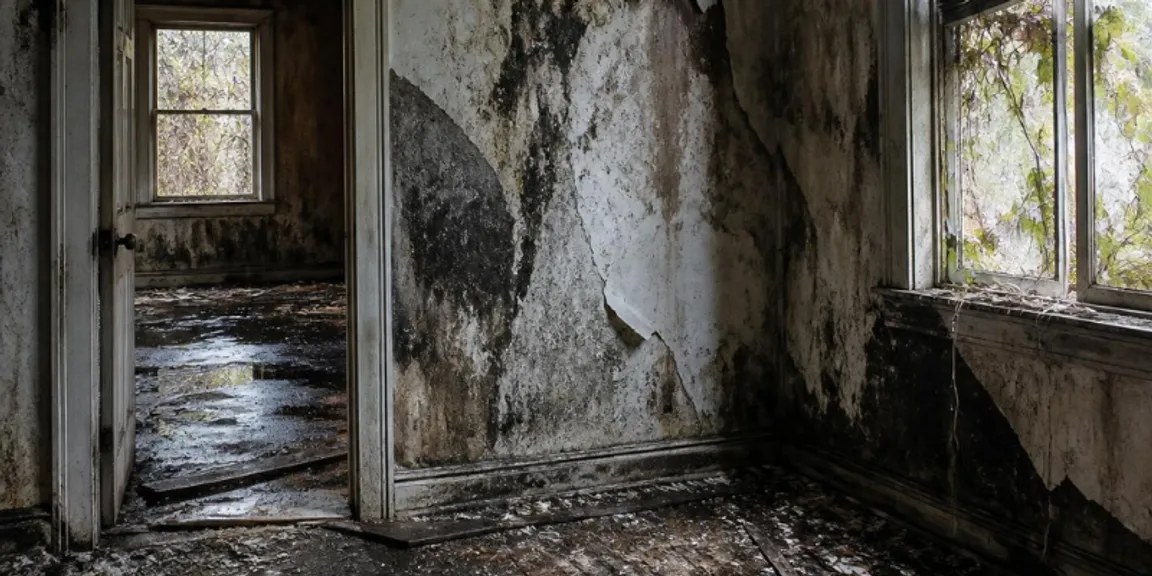

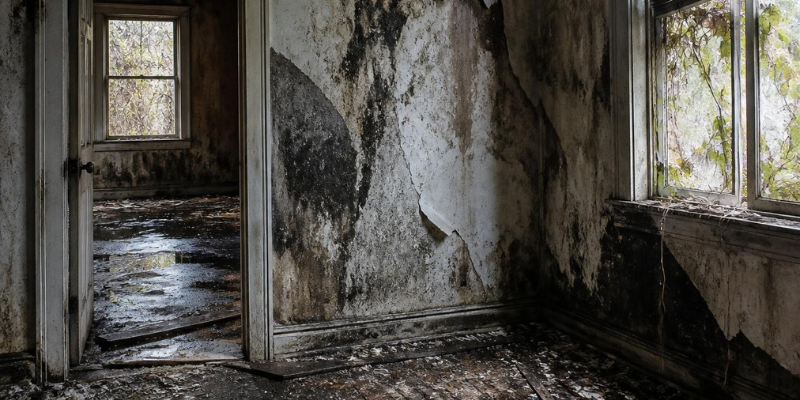
Spring runoff in the Grand Valley doesn’t just swell the Colorado River. It soaks the ground underneath. Growers here have been fighting that since 1915, when they formed the Grand Valley Drainage District because canal seepage had pushed the water table to three feet or less below the surface. Those drains still run. Plenty of houses here still take basement water anyway. If that’s your house, you already know the feeling in your stomach. I’ve been buying houses in western Colorado for years, and water damage is the one condition issue that spooks retail buyers the most. What follows is the practical version: what the damage is really worth, what you owe buyers in writing, and how to sell without handing away your equity.
What Types of Water Damage Should Colorado Home Sellers Know About?
Misread the source of the water, and you’ll price the house wrong by a wide margin. Sometimes in your own favor. Usually not. A split supply line behind a laundry wall is a different animal than three inches of sewage backed up into a garden-level bedroom. I’ve walked into houses expecting one and found the other. Restoration crews sort water into three grades: roughly clean, gray, and black. With that last grade, porous material gets cut out and hauled off, not dried in place.
Western Colorado stacks its own causes on top of the usual plumbing failures.
Swelling ground leads the pack. The Colorado Geological Survey defines expansive soil as clay-bearing ground that swells when it gets wet and shrinks back as it dries. It puts the force that those soils can exert at up to 30,000 pounds per square foot. The survey’s hazard mapping for Montrose County names the Mancos Shale as a major bedrock unit carrying that clay. The Mancos runs under a lot of the Grand Valley and the Uncompahgre Valley, both. Concrete poured in 1974 was never designed to argue with ground like that. I’ve walked through enough basements from that era to see who lost. Hairline cracks open along the cold joint. The next wet spring pushes water straight through them.
That report makes a point most sellers miss. Houses add moisture to those soils on purpose, through downspouts, slabs, and landscape irrigation.
Hail earns its own category. A summer storm across the Grand Valley can bruise a roof badly enough that the leak stays hidden until November, when a stain spreads across a closet ceiling.
Frozen pipes wreck vacant property. I’ve walked into more than one place up valley where the heat failed in January, and nobody opened the door until March.
Sprinkler heads pointed at the foundation. Ice dams on north-facing eaves in Carbondale. A sump pump that died during an outage, or a water heater tank rusting through while the owners were at work. Depending on where the moisture came from, you’re looking at drywall repair or a structural conversation with an engineer.
You don’t have to dry it out, cut it out, or hire an engineer before you sell, because New Hope Properties can help you sell the house exactly as it sits.
Why Does Water Damage Reduce Buyer Confidence in Colorado Homes?
Buyers aren’t afraid of the water. They’re afraid of what it hid.
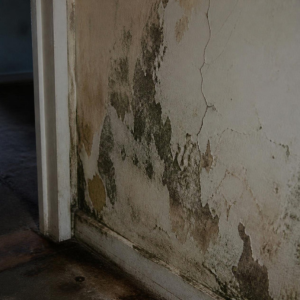
A stain on a ceiling reads as one problem to you and as an unknown quantity to somebody touring on Saturday with a pre-approval. Mold behind a finished wall. Rotted subfloor under new laminate. A foundation that’s been moving quietly for a decade. Nothing in the house proves otherwise, so the buyer prices in the worst case, and their agent encourages it.
Timing works against you as well. Grand Junction homes took a median of 30 days to sell in August 2026, with 367 sold that month, according to Redfin’s market data for the city. Buyers with that much breathing room don’t stretch on a house with a moisture problem. They move to the next listing and let you sit.
Last year, a retired couple in Orchard Mesa called me after two agent listings expired back-to-back with zero offers. Their basement had taken water twice, the disclosure said so honestly, and showings kept stopping cold at the bottom of the stairs where an old chest freezer sat on bare concrete. Six months of mortgage payments went out while two sets of professional photos did nothing.
Word travels in a valley this size. Agents in the Redlands and out toward Palisade talk constantly. A listing that goes under contract and falls out twice picks up a reputation that no price cut erases quickly.
Rather than pay for a guess that big, contact New Hope Properties and sell without the guessing.
How Does Water Damage Affect Home Appraisals and Valuations in Colorado?
Grand Junction’s median sale price landed at $438,710 in August 2026, per Redfin. That’s the number a seller quotes me over the phone. The appraiser cares about something different: whether the property meets the lender’s condition standards on the day of inspection.
Active water intrusion tends to stop a financed sale in its tracks. An appraiser who sees standing water, visible mold, or a wall that looks like it’s been sweating will often write the appraisal subject to repairs, and government-backed loans apply that standard hard. Nobody funds until a licensed contractor finishes the work and the appraiser signs off again. Two more weeks minimum, and your buyer’s rate lock keeps ticking.
Colorado appraisers aren’t mold inspectors or structural engineers, and that cuts both ways. A stained joist gets flagged without any measurement of how far the damage runs. The lender asks for an engineer’s letter. Now three professionals are charging money to describe the same basement. If what gets flagged turns out to be mold, you’re in a different conversation, because selling a house with mold in Colorado carries its own disclosure rules and its own cost range.
You’ll run into a second problem with comparable sales. A market analysis pulls dry, updated properties near yours, because damaged sales in your immediate area are rare enough that there’s nothing clean to compare against. Your agent adjusts downward on judgment rather than data, and reasonable people land tens of thousands apart on the same house.
Sellers sometimes order an appraisal on the house before listing, hoping the number settles a family argument. It rarely does.
What Are Colorado’s Legal Disclosure Requirements for Water Damage?
That appraisal is only half the paper that follows this house to closing. The other half you fill out yourself.
Colorado sellers use the Seller’s Property Disclosure form promulgated by the Colorado Real Estate Commission, available through the Division of Real Estate’s forms page. You complete it to your current actual knowledge, and the form says plainly that failing to disclose a known adverse material fact can create legal liability. Moisture problems, roof leaks, flooding history, and damage from hail or other casualty all get their own lines. If something new surfaces before closing, put it in writing for the buyer promptly.
Repaired damage still gets disclosed. That trips up more sellers than any other part of the form, and the logic is sound. A buyer is entitled to judge for themselves whether your 2019 repair actually held.
On top of the standard form, Colorado adds statutory disclosures covering the source of potable water, radon, special taxing districts, and methamphetamine contamination. Nolo’s summary of Colorado seller disclosure obligations walks through them, and a Colorado real estate attorney can tell you how they apply to your property.
Does as-is get you out of any of this? No. An as-is contract shifts the risk of unknown defects onto the buyer and doesn’t touch your duty to disclose what you already know. Colorado stopped being a pure caveat emptor state a long time ago.
Concealment claims are the expensive ones. Fraud-based claims generally don’t start running until the buyer discovers the problem, so painting over a stain and staying quiet can follow you long past closing. Ask a real estate lawyer about the window that applies to you. Full written disclosure costs you nothing and buys real protection.
An as-is listing leaves your duty to disclose exactly where it was, so if you want as-is to mean what it says, sell your Colorado house faster with no inspection contingency in the way.
Should You Repair Water Damage or Sell Your Colorado House As-is?
“If I just fix the basement, I’ll get full retail.” Sometimes that’s true. Usually, the arithmetic doesn’t cooperate.
Run it honestly. Remediation, new framing, drywall, flooring, paint, plus the drainage correction that keeps the water from coming back. Add grading, gutter extensions, and maybe an exterior waterproofing dig along one foundation wall. Then add carrying costs while the work happens: mortgage, insurance, utilities to keep the pipes from freezing, and property taxes that don’t pause for construction.
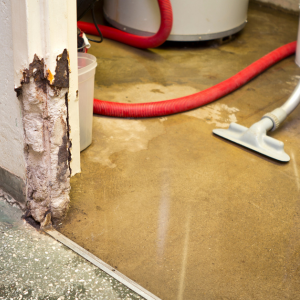
Contractor scheduling is the piece that sellers underestimate. A Colorado restoration company shows up fast for an active emergency. A drainage crew and a foundation contractor booked in sequence during a busy Western Slope summer can push you into October.
Repairs make sense when the damage is contained and cheap relative to the price bump it unlocks. A single-room leak with a replaced supply line and documented drying? Fix that and list it. A basement with recurring intrusion, questionable framing, and an engineer’s report you haven’t read? You’d be financing somebody else’s renovation on a property you no longer want, hoping the market rewards you in six months.
Selling as-is puts the repair risk on a buyer equipped to carry it. That’s the whole point of investors and cash buyers, including local operations like New Hope Properties that price the property in its current condition and buy without lender repair conditions before closing. You net less than a perfect retail sale on paper. You also skip the contractor bills, the concessions after inspection, and the months of payments.
One warning about insurance claims. If a carrier already paid you for damage you didn’t repair, that money and that paperwork belong in the conversation with any buyer.
How Do You Prepare a Water-damaged Colorado Home for Sale?
Most Colorado families plan a weekend, some bleach, a box fan, and a new carpet pad. Then a moisture meter reads 22 percent in the bottom plate of a wall that looks perfectly fine, and the weekend plan dies.
Drying is a measurement, not a feeling. A wall can read dry to the touch and hold enough moisture behind the paper to keep feeding mold for months. Anybody with a meter finds it in about four seconds. That includes the buyer’s inspector.
Documentation does more for your sale price than cosmetics do. Keep the restoration invoice, the drying log, the plumber’s receipt, the roofer’s photos, the insurance claim summary, and the mold remediation clearance letter. Hand copies to every serious buyer. Paper showing what happened and what got repaired turns a scary unknown into a priced known.
Safety and stabilization come before presentation. Water off, leak stopped, standing water pumped out, air moving, gutters cleared, downspouts extended away from the foundation. Those moves cost little and stop the damage spreading.
Should you get an independent mold test? If a buyer has already raised it, yes. Your own report gives you the first version of the facts. If nobody’s asked, you’re volunteering a document that may work against you.
Skip the staging. A water-damaged house doesn’t sell on throw pillows, and furniture rental money is money not spent on the drainage problem. Clear the space, light it well, make the affected area easy to inspect, and let the house be judged on what it is.
Every dollar you sink into drying equipment and carpet pad is a dollar you don’t get back, and investor home buyers in Aspen and nearby Colorado cities will look at the house without any of it.
How Do You Price a Water-damaged Home for Sale in Colorado?
Let’s not start with what you need out of this house. Let’s start with what a buyer’s lender will allow, because that sets the ceiling, whether we like it or not.
Colorado’s statewide median sale price was $552,599 in August 2026, with a median of 49 days on market, according to Redfin’s Colorado data. Nice number. It describes dry, financeable houses, which isn’t the pool you’re competing in.
Pricing damaged property works backward from the after-repair value. Start with honest comparable sales for your condition class. Subtract the full repair estimate, not the optimistic one. Subtract holding costs. Subtract the buyer’s margin, because whoever takes on the risk gets paid for it. What remains is roughly your range. Industry write-ups on water damage put the gap at 10 to 30 percent below equivalent dry homes, and severe cases involving sewage or structural movement land lower.
Overpricing a compromised house is the most expensive mistake available. The listing sits, accumulates days on market, gets cut twice, and eventually sells below where an accurately priced house would have landed in week two. Colorado buyers read price-drop history like a medical chart.
Two offers aren’t comparable just because the numbers match. A financed offer with an inspection objection deadline and a lender who’ll demand repairs is worth less than a slightly lower cash offer with proof of funds and no appraisal condition. Compare net proceeds and probability of closing, in that order.
Disclose the damage in the listing and price accordingly. Buyers who show up already knowing about the basement don’t renegotiate after inspection. If you’d rather skip the pricing exercise entirely, cash home buyers in Montrose, Colorado will price the house in its current condition and tell you the number up front.
What Marketing Challenges Come with Selling a Water-damaged Colorado Home?
“Can I just leave the basement out of the photos?”
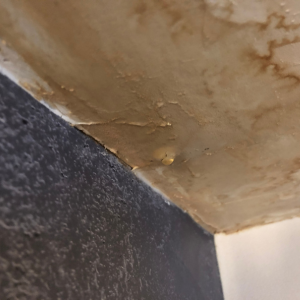
You can, and it backfires. A gallery that jumps from the kitchen to the backyard tells every experienced Colorado agent in Mesa County that something got skipped, and the showing turns into a hunt for whatever you hid. Snap a photo of the space, then disclose the condition in the listing remarks in plain language. Naming the problem yourself filters out the buyers who were never going to close anyway.
Your marketing audience shrinks in two directions at once. Conventional buyers with 5 percent down can’t finance a house that their appraiser flags, and those buyers rarely have cash for repairs on top of the down payment. Renovation loans exist, and they add appraisal complexity that a nervous first-timer seldom tolerates.
Insurability turns into a problem nobody warns sellers about. A buyer’s carrier may decline coverage on a property with unrepaired water damage or an open claims history, and no coverage means no lender. Sales die there quietly, after three weeks of everyone assuming things were fine.
Who Buys Water-damaged Houses in Colorado and How Do Negotiations Work?
A duplex owner in Delta had a slab leak that ran under two bedrooms for who knows how long. Three weeks after she stopped trying to list it, the deed transferred, and she was done paying for a house she’d already left.
In my experience, four kinds of buyers actually pursue this property type. Owner-occupant buyers with renovation loans and real patience. Local landlords adding to a rental portfolio. Flippers who need a wide enough spread to justify the unknowns. Direct cash buyers who buy as-is and close on their own funds.
Negotiations run differently with each. A retail buyer negotiates twice, once on price and again after inspection, and the second round is where sellers bleed. Investor buyers negotiate once, up front, assuming you’ve been straight about what’s wrong. That single-round structure is the actual benefit of selling to a company like New Hope Properties. The number you agree to in week one is the number on the settlement statement.
Vet whoever you’re talking to. Ask for proof of funds, not a letter of intent. Ask whether they’re buying the house themselves or assigning your contract. Ask what specifically would let them re-trade the price after you sign. A buyer who answers those clearly beats one who quotes a bigger number vaguely. We wrote up how to choose the right cash buyer for your home if you want the full list of questions before you take the first call.
A seller in Rifle had carried two mortgages for close to a year when we spoke, having moved for work while a crawlspace moisture problem killed two contracts. We closed in under three weeks, with her old snowblower still sitting in the garage.
Frequently Asked Questions
Can an old insurance claim make my house harder to sell?
It can. Insurance carriers share claims history on individual properties, and a buyer’s insurer can look yours up through a CLUE report before writing a policy. Three claims inside five years is the threshold underwriters typically treat as a red flag, and repeat water claims draw extra scrutiny because they suggest the original problem never got repaired. It doesn’t make the house unsellable. It does mean a retail buyer may hit a wall you can’t fix.
Do I have to disclose water damage I already repaired?
Yes. Colorado’s Seller’s Property Disclosure asks about past and present water intrusion, roof leaks, sewer backups, and mold, and it asks whether you’ve had repairs done. Keep receipts and any remediation certificates, because documented work you can prove beats a vague “we took care of that years ago” every single time.
Will a buyer’s lender find out even if I say nothing?
Usually. Appraisers photograph stains and active moisture, inspectors carry meters, and underwriters read both reports. Nondisclosure also exposes you to a claim after closing. The downside of staying quiet is bigger than the discount you’re avoiding.
Should I file an insurance claim before selling?
It depends on the number. If the repair cost is close to your deductible, filing mostly buys you a claims record that complicates the buyer’s insurance later. If a pipe bursts and the damage runs into five figures, file it. Ask your agent what the claim will do to the property’s history, not just your premium.
Is a cash offer always lower than the listing price?
The offer number is lower. The net is often close, sometimes better, once you subtract repairs, holding costs, commissions, and the concessions a retail buyer asks for after inspection. Run both scenarios for your house on paper with real figures.
How fast can a water-damaged house actually close?
Two to three weeks to closing is typical with a cash buyer, limited mainly by the title company and any liens or probate issues to clear. Listing the same house realistically takes sixty to ninety days if it appraises and the buyer’s insurance cooperates.
Got a house in Grand Junction, Delta, Montrose, or anywhere on Colorado’s Western Slope with water damage you’d rather not manage another season? It costs nothing to see what a direct sale would look like. Tell us what happened, what you know, and what you don’t. New Hope Properties We’ll give you a cash offer and an honest read on whether listing might serve you better. If the timing isn’t right, that’s a fine answer too.
Helpful Colorado Blog Articles
- How to Sell a House By Owner in Colorado
- How to Sell a House During a Divorce in Colorado
- Can You Sell a House With a Mortgage in Colorado
- How to Sell Rental Property in Colorado
- How Much Does It Cost to Sell a House in Colorado
- Selling a House With Mold in Colorado
- Can a Jointly Owned Property Be Sold by One Owner in Colorado
- How Long Should You Live in a House Before Selling It
- Sell House With Water Damage in Colorado
- How Long Does It Take to Force the Sale of Property in Colorado?